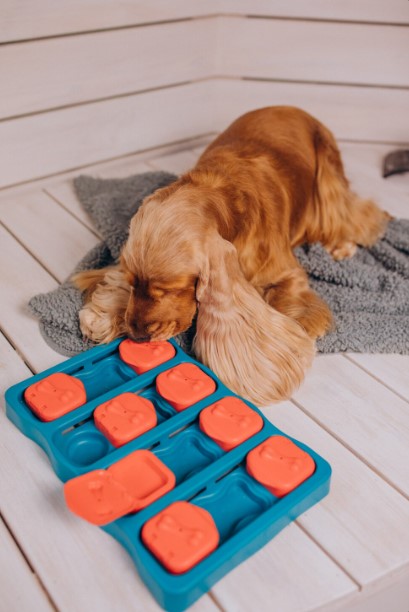
Best Interactive Dog Toys for Boredom Relief
A bored dog rarely stays quietly bored. Some dogs chew furniture, dig at carpets, steal household items, bark for attention, or follow family members from room to room looking for something to do.
The best interactive dog toys give dogs a safe way to use their energy and natural instincts. Instead of simply lying on the floor, these toys ask dogs to sniff, roll, push, pull, lick, chase, or solve a small problem.
Interactive play cannot replace walks, training, rest, and human attention. However, the right toy can make a dog’s day more engaging and reduce the chances of boredom turning into unwanted behavior.
At a Glance: The best interactive dog toys match your dog’s size, chewing strength, play style, and skill level. Food puzzles, snuffle mats, treat dispensers, tug toys, and hide-and-seek toys can support mental stimulation and slower eating. Start with an easy challenge, supervise new toys, and remove damaged items immediately.
Why Dogs Become Bored
Dogs need more than food, water, and a quick bathroom break. They also need opportunities to explore, sniff, learn, move, chew, and interact with people.
Boredom is more likely when a dog:
-
Spends long periods alone
-
Gets the same walk every day
-
Has few chances to sniff and explore
-
Receives little training or play
-
Has toys available but no variety
-
Has more energy than the daily routine uses
Young dogs and working breeds may become restless quickly, but any dog can need more mental activity. Senior dogs may also benefit from gentle puzzles that encourage sniffing and problem-solving without demanding intense exercise.
Not every destructive behavior comes from boredom. Chewing, barking, pacing, or house-soiling may also be linked to anxiety, pain, hunger, lack of training, or a medical condition. Sudden behavior changes should be discussed with a veterinarian.
How Interactive Dog Toys Help
They Give Dogs a Job
Many dogs enjoy activities that have a clear goal. Finding hidden food, moving a puzzle piece, or carrying a toy gives them something specific to work on.
A treat-dispensing ball, for example, rewards the dog for pushing and rolling it. A snuffle mat rewards sniffing. A hide-and-seek toy encourages searching and pulling.
These activities provide an acceptable outlet for behaviors dogs may otherwise direct toward household objects.
They Provide Mental Stimulation
Interactive dog toys require dogs to make choices. The dog may need to determine which compartment contains food, how to move a sliding part, or which direction makes a dispenser release kibble.
Mental work can be tiring in a different way from running. A short puzzle session may help a dog settle after using focus, scent, and problem-solving skills.
The challenge must suit the dog. A toy that is too easy may lose its appeal, while an impossible puzzle may cause frustration.
They Can Slow Fast Eating
Some dogs finish meals within seconds. A puzzle feeder, slow-release ball, or snuffle mat can spread the same measured portion over a longer period.
This turns breakfast or dinner into an activity without requiring extra treats. Use part or all of the dog’s normal meal rather than adding food on top of the daily allowance.
They Encourage Independent Play
Owner-led games are valuable, but dogs also need to learn how to remain occupied calmly.
Certain food toys, lick toys, and beginner puzzles may support independent activity after you confirm that your dog uses them safely. They can be useful during quiet work periods, meal preparation, or short settling exercises.
Independent toys should not become a replacement for social contact or exercise.
Best Interactive Dog Toys by Type
|
Toy Type |
Best For |
Main Benefit |
Main Risk |
|
Treat-dispensing ball |
Food-motivated dogs |
Encourages movement and problem-solving |
May roll under furniture |
|
Puzzle board |
Dogs that enjoy using paws and noses |
Builds problem-solving skills |
Can frustrate beginners |
|
Snuffle mat |
Dogs that love sniffing |
Encourages natural foraging |
Fabric may be chewed |
|
Stuffable rubber toy |
Licking and quiet enrichment |
Can keep dogs occupied longer |
Wrong size may cause choking |
|
Hide-and-seek plush toy |
Gentle dogs that enjoy searching |
Combines scenting and pulling |
Not suitable for destructive chewers |
|
Tug toy |
Social and energetic dogs |
Provides exercise and interaction |
Requires controlled play |
|
Motion-activated toy |
Dogs interested in movement |
Encourages chasing and investigation |
Noise may frighten sensitive dogs |
|
Rolling feeder |
Fast eaters |
Slows meals and adds movement |
Can be noisy on hard floors |
There is no single toy that works for every dog. The best choice depends on how your dog naturally prefers to play.
Food Puzzle Toys
Food puzzles are among the most useful interactive toys for dogs because they combine meals with mental work.
Beginner puzzles may have open compartments or simple sliding pieces. More advanced designs require dogs to complete several actions in the correct order.
Start with food that is easy to see and smell. Leave some compartments open during the first session. Once your dog understands the toy, gradually increase the difficulty.
Do not immediately buy the hardest puzzle because your dog seems intelligent. Puzzle-solving is a learned skill. A difficult design can cause barking, pawing, chewing, or complete loss of interest.
Expert tip: Increase difficulty by changing the puzzle steps, not by packing food so tightly that the dog cannot reach it.
Snuffle Mats and Scent Games
A snuffle mat contains fabric strips or folds where food can be hidden. Dogs use their noses to locate each piece.
This style works well for dogs that enjoy sniffing and for dogs that become overexcited by fast-moving toys. It offers a quieter form of enrichment and can be used with dry kibble.
Supervise the first sessions. Some dogs treat the mat like a chew toy and begin pulling or swallowing fabric.
You can also create simple scent games without special equipment. Hide a few pieces of kibble around one safe room and encourage your dog to “find it.” Begin with visible pieces before using harder hiding places.
Treat-Dispensing and Stuffable Toys
Treat-dispensing toys release food when dogs roll, shake, or move them. Stuffable toys hold wet food, kibble, or a mixture that dogs lick and remove gradually.
These toys can be useful during crate training, calm settling, or supervised alone-time practice.
Use measured food. A toy filled with peanut butter, cheese, and treats may contain far more calories than a regular meal.
Check ingredient labels carefully. Human foods used in toys should not contain xylitol, chocolate, grapes, raisins, onions, garlic, or other dog-toxic ingredients.
Wash the toy after every use when it contains wet or fresh food. Choose designs that open enough for proper cleaning.
Tug and Owner-Led Interactive Toys
Tug toys provide physical activity, social engagement, and an opportunity to practice self-control.
Teach your dog clear cues such as “take it,” “drop,” and “all done.” Pause the game if teeth touch skin or the dog becomes too intense.
Tug does not automatically make a dog aggressive. Problems are more likely when play has no boundaries, the toy is too small, or people pull in ways that strain the dog’s neck.
Keep the toy low and move it from side to side rather than lifting the dog or making sudden vertical jerks. Puppies and dogs with dental or neck problems need especially gentle play.
Choosing Interactive Dog Toys for Large Dogs
Interactive dog toys for large dogs need more than a “large” label. Check the actual dimensions, material thickness, weight, and recommended chewing level.
A toy should be too large to swallow but easy enough for the dog to carry or manipulate. Large dogs with powerful jaws can quickly destroy products designed only for gentle play.
When comparing large dog toys, look for:
-
Thick, durable material
-
Reinforced seams
-
No small removable parts
-
A size wider than the dog’s mouth
-
Clear manufacturer weight guidance
-
Easy-to-clean surfaces
-
No exposed batteries or weak covers
A large dog that destroys toys quickly should not be left alone with a new product. Even durable toys can crack, tear, or lose pieces.
No dog toy is truly indestructible.
How to Match a Toy to Your Dog’s Play Style
Watch how your dog already interacts with objects.
For Dogs That Love Food
Choose rolling dispensers, puzzle boards, snuffle mats, or stuffable rubber toys.
For Dogs That Love Chasing
Try motion toys, fetch toys, rolling balls, or owner-controlled chase games.
For Dogs That Love Pulling
Use tug toys or hide-and-seek toys with removable plush pieces, provided the dog does not swallow fabric.
For Dogs That Love Chewing
Select durable rubber toys intended for the dog’s size and chewing level. Avoid fabric puzzles if the dog immediately tears and eats material.
For Gentle or Senior Dogs
Choose easy food puzzles, soft scent games, lick toys, or slow-moving activities that do not require hard running or jumping.
A toy that suits the dog’s preferred behavior is more likely to hold attention than a product selected only because it is popular.
Preventing Frustration With Interactive Toys
Dogs need to experience early success.
Place treats around a new toy before hiding food inside it. Demonstrate moving parts if needed. Praise investigation, but avoid physically forcing the dog to touch the toy.
Signs that a puzzle may be too difficult include:
-
Repeated barking at the toy
-
Aggressive biting
-
Flipping the entire puzzle
-
Walking away quickly
-
Looking repeatedly to the owner for help
-
Pawing without making progress
Make the activity easier by opening compartments, using stronger-smelling food, or switching to a beginner toy.
Sessions do not need to be long. Ten focused minutes can be more useful than leaving a frustrating puzzle available for an hour.
Can Interactive Toys Stop Destructive Behavior?
Interactive toys may reduce destruction when boredom or unused energy contributes to the behavior. They give the dog something appropriate to chew, search, or manipulate.
However, simply placing a toy beside a dog will not solve every problem.
For better results:
-
Provide suitable daily exercise.
-
Include sniffing during walks.
-
Practice short training sessions.
-
Rotate toys every few days.
-
Use meals for enrichment.
-
Prevent access to unsafe household objects.
-
Reward calm, appropriate play.
Consider this example: A young dog chews couch cushions every afternoon. The owner adds a morning sniff walk, serves lunch in a puzzle feeder, and offers a supervised stuffed toy before the usual chewing time. The dog now has several acceptable activities before reaching the couch.
Management and enrichment work better together than either one alone.
Interactive Toy Safety
Inspect toys before and after every session.
Remove a toy if you notice:
-
Deep cracks
-
Missing pieces
-
Loose strings
-
Exposed stuffing
-
Sharp edges
-
Broken plastic
-
Damaged battery covers
-
A size that can be swallowed
Supervise toys containing food, ropes, fabric, squeakers, batteries, or removable parts until you know how your dog handles them.
Stop play if your dog becomes overheated, unusually tired, frustrated, or possessive. Dogs with joint, heart, breathing, or mobility problems may need veterinary guidance before active games.
Frequently Asked Questions
What Are the Best Interactive Dog Toys for Boredom?
Food puzzles, snuffle mats, treat-dispensing balls, hide-and-seek toys, and owner-led tug games can help. The best option matches your dog’s size, play style, and skill level.
Can Interactive Dog Toys Stop Destructive Chewing?
They can reduce chewing caused by boredom by providing a safer activity. Destructive chewing may also result from anxiety, teething, pain, or lack of training, so the cause should be addressed.
What Interactive Dog Toys Are Best for Large Dogs?
Interactive dog toys for large dogs should be correctly sized, durable, and free from small removable pieces. Thick rubber food toys, reinforced tug toys, and sturdy rolling feeders may work well under supervision.
How Often Should I Rotate Dog Toys?
Rotate toys every few days or once your dog begins losing interest. Keep a few available at a time, then reintroduce stored toys later so they feel less familiar.
Can Dogs Be Left Alone With Interactive Toys?
Only after you have supervised several sessions and confirmed that the toy remains intact. Dogs that chew aggressively, swallow pieces, or damage toys should not use them without supervision.